Three clients asked us the same question this month: "WordPress, Webflow, or Framer?" Three completely different needs behind that question a simple brochure site, a high-volume editorial blog, a landing page that needs to launch in three days and yet the same question, as if there were one universal right answer. There isn't.
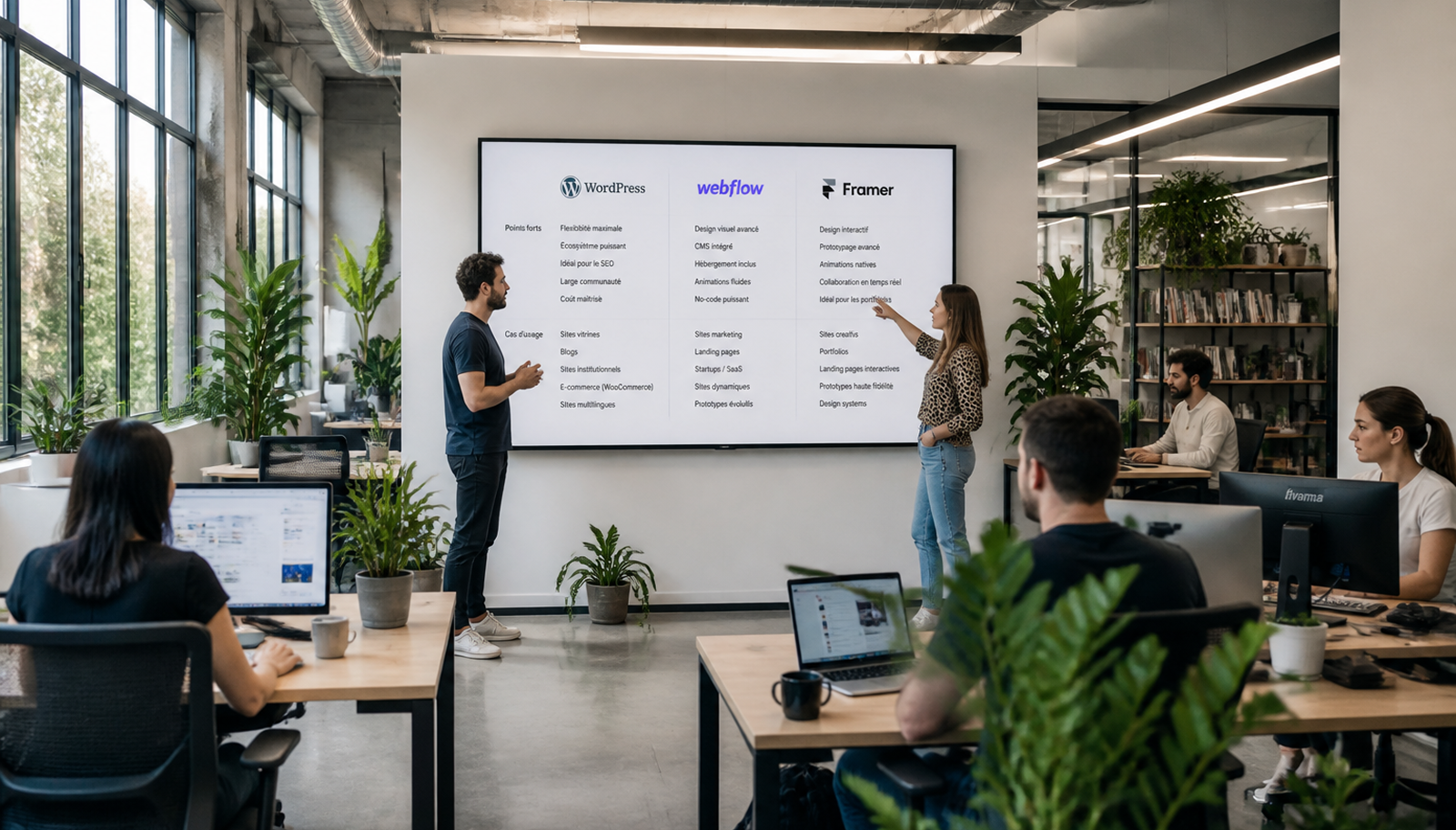
WordPress remains the strongest option for sites with heavy editorial volume and demanding SEO needs its plugin ecosystem still has no real equivalent for flexibility. The trade-off hasn't changed: technical debt piles up fast without regular maintenance, and quality varies wildly across third-party plugins.
Webflow remains the right call when a marketing team wants real autonomy over content and design without depending on a developer for every tweak. Its visual CMS has matured, but complex business logic advanced user accounts, elaborate conditional workflows is still more limited than a fully custom code stack.
Framer has become the fastest route from prototype to production site, with genuinely strong native generative AI for landing pages and brochure sites. Its limitation hasn't changed in two years: less suited to heavy structured content or complex e-commerce needs.
Genesis Agency Insight: In pre-sales conversations, we ask one simple question before recommending a platform: "who's updating this site in six months?" The answer an autonomous marketing team, an in-house developer, or nobody available usually rules out two of the three options before features even come up.
Genesis Agency Insight: One trap to watch with no-code platforms: lock-in. Migrating a Webflow or Framer site to a different stack a few years down the road usually costs more than expected. That's not a reason to avoid them it's a reason to think about the exit before you commit.
There's no single best CMS in 2026, only the right fit for your content volume, your team, and your maintenance budget. The wrong choice rarely shows its cost in month one it shows up eighteen months later.
Torn between platforms for your next project? Genesis Digital Factory challenges the actual need first, and recommends a stack second not the other way around.


Whether you need to redesign your website, boost your social media presence, or launch high-performing advertising campaigns, we are here to support you. Free 30-minute strategic consultation to discuss your challenges, no commitment, no pressure. Just an honest, useful conversation.


.svg)
.png)