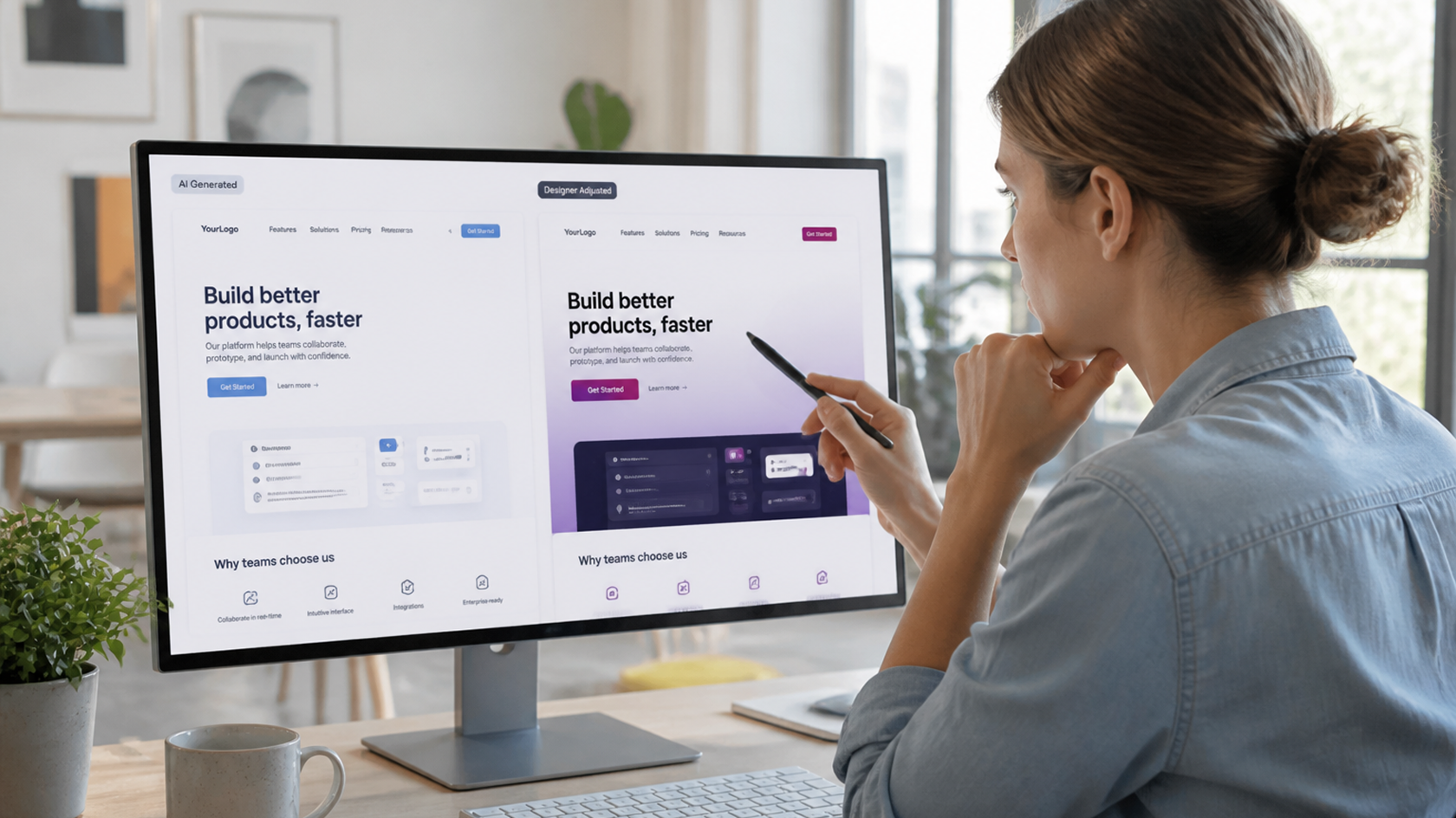
Ask a generative AI to design your landing page tonight. It will in a few minutes, with a clean layout and a coherent color palette. The real question isn't whether it can. It's whether your visitors will convert on it.
By 2026, Generative UI has moved past static prototyping: some interfaces now adapt in real time based on visitor behavior, generated on the fly instead of locked at design time. Impressive on paper. On the ground, it changes less about strategy than people assume.
Two different uses hide under this label. The first: quickly generating mockups or screen variants from a prompt to explore directions. The second, more recent: dynamically generating part of an interface based on user context a recommendation module that recomposes its own layout depending on browsing history, for example. The two uses don't share the same maturity, or the same risk profile.
Genesis Agency Insight: A client showed us a landing page entirely generated by AI: polished design, smooth animations, nothing to fault visually. Conversion was half what the old version delivered. Digging in: the AI had put the product's technical features front and center, while 80% of visitors were arriving looking for a cost problem to be solved. The interface looked great. It wasn't selling what people actually came to buy.
Genesis Agency Insight: The risk we're watching grow in 2026 is design "AI slop": generic interfaces, all built on the same statistically "optimal" patterns, that start looking identical across unrelated sites. In a market saturated with generative AI, visual differentiation is becoming a competitive edge again not a cosmetic detail.
Generative UI speeds up exploration and personalization at scale. It doesn't replace the strategic call on what an interface needs to accomplish for your business that's still human work, framed and tested against reality.
Want to use Generative UI without losing strategic control of your interface? That's the kind of engagement Genesis Digital Factory runs, sitting right at the intersection of web design and AI tooling.


Whether you need to redesign your website, boost your social media presence, or launch high-performing advertising campaigns, we are here to support you. Free 30-minute strategic consultation to discuss your challenges, no commitment, no pressure. Just an honest, useful conversation.


.svg)
.png)